letsgosew.com
  • Home
  • Contact
  • Privacy Policy
  • Sign Up for Sewing News, Freebies, & Updates
  • Order Just Jackets Embroidery Collection
  • Just Jackets FAQ
  • Order Wrapped in Embroidery Book by Joanne Banko
  • Joanne Banko's Blog
  • Machine Embroidery Survey
  • FREE Tutorials and Tip Sheets
    • NEW! Snowflake Tea Light Cover For Digital Cutter
    • NEW! Decorative Ribbon Idea
    • Holiday Greeting Card
    • Faux Cathedral Windows Candle Mat
    • Embroidered Sachet Envelope Project
    • Let's Make Labels Tip Sheet
    • Serger Sample Sheet
    • 2-Thread Serger Techniques-Pt.1
    • Basic Serger Stitches
    • Sew with Your Feet_Resources
    • Project! Chic Triangle Scarf
    • Denim Re-design Hanging Organizer
    • Sewing a Cargo Pocket
    • Interfacings for Embroidery Tip Sheet
    • Making Kitchen Towels & FREE Cornucopia Applique Design
    • Two Tone Tote Bag Project
    • Embroidery Placement Positioning Tips
    • Tip sheet - 5 Reasons Quilters Need A Serger
    • Free In-the-Hoop Patch Pocket Design
    • Serging versus Sewing
    • FREE Project-Embroidered Gift Tag with Gift Bag
    • Tip Sheet - Pillow Pointers
    • Tip sheet_Sew Straight Laser for Seams
    • Embelishment Tips from dime V.111
    • Tip sheet - Shannon Embrace Double Gauze
    • Tip sheet - Fun with Fonts
    • Fabric Tip Sheet- Sewing Faux Suede
    • Tip sheet for Sewing & Embroidering with Metallic Thread
    • Friendship Bag
    • Fleece Ruana Pattern: As seen on PBS It's Sew Easy TV
    • Fabric Tip Sheet - Crepe Back Satin
    • Fabric Tip Sheet-Sewing Slinky Type Knit
    • Fabric Tip Sheet - Fleece
    • Fancy Footwork Tipsheet - About the Walking Foot
    • Fancy Footwork Tip Sheet_Basic Appliqué
    • Fancy Footwork Tip sheet - Ruffler Attachment
    • Fancy Footwork Tip Sheet - Narrow Hems with a Standard Foot
    • Fancy Footwork Tip Sheet - Non Stick Foot
    • Tip sheet - Machine Embroidery Pattern Connection Resources
    • Embroidered Greeting Card Basting Files
    • Tip Sheet - Machine Set up for Shirring
    • Tip sheet - Snowman and Target Markers
    • Tip Sheet for Printing on Fabric
    • Tip sheet-Five Ways to Finish Fleece Blankets
    • T-Shirt Transformation Tutorial
    • Project- Serge a Little Girl's Sweet Summer Dress
    • Tip Sheet for Fleece Frame Shape Appliqué
    • Tip Sheet - Bobbin Work Sewing & Embroidery
    • Tip Sheet - Custom Covered Buttons
    • Tip Sheet - Liquid Stabilizers
    • Tip sheet - Appliqué with Brother XV8500D & ScanNCut
    • Project - Sheer Chiffon Wrap
    • Project - Pearl Trimmed Candle Ring
    • Tip Sheet -Mitered Satin Blanket Binding
    • Fabric Tip Sheet_Knit Know How
    • Tool School Tip Sheets
    • ITH Project Planner
  • As seen in DiME Magazine - Photo Gallery
  • Sewing and Embroidery Events
  • My Sewing Story
  • It's Sew Easy TV Online Blog
  • IT'S SEW EASY TV Videos & Bonus Files
    • It's Sew Easy TV Series 2100
    • It's Sew Easy TV_Series 2000
    • It's Sew Easy TV_Series 1500
    • It's Sew Easy TV - Series 1600
    • It's Sew Easy TV_Series 1700
    • It's Sew Easy TV Series 1800
    • It's Sew Easy TV Series 1900
    • NEW! Superstar Sewing Stitches
    • NEW! Classy Textured Cape
    • NEW! Baby Bath Wrap
    • NEW! Detachable Collar
    • Sew a Swimsuit
    • Machine Embroidered Garments
    • Kimono Blouses
    • Custom Covered Hangers
    • Sewing Beautiful Belts
    • Felted Flower Hat Trim
    • Sew a Waffle Weave Robe
    • Learn about Couching accessories!
    • Turn a Pashmina into a Trendy Topper
    • Machine Embroidered Reverse Applique
    • Machine Embroidered Knit Dress
    • Use Non-Stick Foot to sew a Custom Luggage Tag
    • Serge & Sew Broomstick Skirt
    • Machine Embroidered Western Jacket
    • Machine Embroidered Bobbin Work Pashmina
    • Embroidered Pajamas
    • Sewing Pearls and Sequins
    • Learn how to use the Fringe Foot
    • Quilted Pinwheel Patchwork Tote
    • Machine Embroidered Lace for Lingerie
    • Sewing Circles with a Circular Attachment
    • Sew with the Edge Joining Foot
    • Re-style Tops for Little Girls
    • Short Style Tip- Blouse Embellishment
    • Learn how to make pretty piping using the Piping Foot
    • Embellish with the Three Slot Cording Foot
    • Facebook Live Interview 12-4-2018
    • Machine Embroidery - Starter Tips
  • CE Survey #1
  • CE Survey #2
  • CE Survey#3
  • CE Survey #4
  • CE Survey #5
  • CE Survey #6

Delving into Digitizing!

4/30/2022

0 Comments

 
See all the wonderful Designs in Machine Embroidery software programs and designs *HERE on their site!
Are you curious about machine embroidery software and want to learn more? Then keep reading. This post and with video highlights is for you!!! I had the privilege of interviewing Roy Garland on one of my Sew Tell Me YouTube shows. Roy is the Chief Technology Officer at Designs in Machine Embroidery. In this interview Roy shared some insight into what digitizing is all about. He also shared some of his incredible embroidered artistry with friends of Let's Go Sew.

Here you'll find some highlights from this fun filled show. You can watch it from beginning to end by clicking on the arrow above, or go directly to the timestamps listed below for specific parts of the interview. Enjoy!!!
  • Time stamp 4:53: Roy gives us a definition of digitizing.
  • Time stamp 10:31: Let's see some of his fabulous custom digitized samples and learn about early days of digitizing when designs were created with paper tape. From family portraits to lace designs and images of famous people, you'll love seeing these incredibly detailed designs!
  • Time stamp 38:48: Let's explore some features of the easy to use FREE Tool Shed program, and the super affordable Perfect Stitch Viewer program from DiME. See how to make easy edits to free designs from DiME, and make many more new designs with pieces and parts in existing designs! You'll find both Software Programs plus the whole DiME software line up when you *CLICK HERE.
  • Time stamp 1:16:50: See how to download the Just Jackets collection and bring it into FREE software or use it with the optional DiME Patch and Appliqué Maker software.

Note: If you're interested, you can purchase the Just Jackets collection HERE on my site with an included USB pre-loaded with your favorite format, or purchase the downloadable version directly from DiME HERE.
Check out these addtional designs created by Roy, using the DiME *My Lace Maker software.
This show included lots of Q&A, with tips and tricks from master Digitizer, Roy Garland. Check out this video HERE on my YouTube channel if you'd like to see the conversation form the live show chat.

Enjoy learning from sewing and embroidery experts? I have a new live 
show the fourth Monday of each month. If you haven't already subscribed to my channel, I invite you to subscribe HERE.

Thanks for reading and thanks for watching the video!
0 Comments

Time For Tea And A Free Embroidery Design!

4/3/2022

32 Comments

 
Picture
It's always fun to take a plain tea towel and transform it with a bit of embroidery and some colorful trim!  I created this towel for the Brother Stitching Sewcial blog for the month of April 2022.
Picture
The featured FREE design is available for download in the .pes format and fits a 4-inch hoop size. If you read the instructions in the Brother blog posted HERE on their site, you'll see that I used a special method I call "off site" embroidery to avoid stitching directly on the towel. Please see my important note at the end for a link to the free design.

Essentially, "off site" embroidery consists of stitching the embroidery design on something else, and then applying it to the project as an appliqué. There are lots of advantages to this method. In this case, I wanted the backside of the towel to be free from the customary, unattractive "wrong side" stitches. There are other reasons to use this technique. If you'd like to learn more, below you'll find links to other "off site" embroidery projects I stitched in the past.
  • Dress with Blue Roses-It's Sew Easy TV show 1204-2
  • Pashmina Mania-It's Sew Easy TV show 1703-1
  • Wrap Dress-As seen in Designs in Machine Embroidery
Below you'll find the addition of the Brother Sews YouTube show where I walk through the project with show host Angela Wolf. I shared lots of tips in this video. Enjoy!
No embroidery? No problem! Appliqué is an easy way to add a design element to your tea towel in place of embroidery. I found a cute tea cup design on the Quilting Daily website HERE. Appliqué is an easy way to add colorful accents to your projects. CLICK HERE for an appliqué tip sheet. 

Now, back to the embroidered tea towel project. In celebration of April being National Serger month, I used the serger to make the ruffled trim that ties together my pretty purple color scheme. Follow the instructions and you'll learn how to use a gathering foot on the serger. This foot makes it easy to gather one strip and sew it to a second strip all in one quick pass.

Of course you can use any color combo you choose for the project. The tea cup itself is made up of just three different colors, making it easy to change for your own personal color palette.

I'd love it if you would visit the Brother blog and then come back here to leave your comments. I'd be happy to answer any questions you might have too!

Happy stitching!
IMPORTANT UPDATE!
Hooray! The issue with the free design coming up as "not free" has been resolved on the Brother site. Click directly on the link in the project instructions for the free design.
Below is a PDF version of the project you can view or print.
4_22_tea-towel-ruffle.pdf
File Size: 18749 kb
File Type: pdf
Download File

32 Comments

Sew . . . Tell Me interview with Rhonda Pierce

3/5/2022

72 Comments

 
The February edition of the Let's Go Sew with Joanne Banko LIVE show (held on 4th Monday of the month), was full of information, fun conversation, and lots of friends sharing thoughts and asking questions in the chat. We had a live give-away too and at the end this post you'll see how you can enter to win another give-away right here.

​This time around, the show turned into a virtual learning session on sewing machine needles, as we learned from industry expert, Rhonda Pierce. Rhonda gave us all insight into everything it takes to understand the dynamics of sewing machine needles and gave guidance as to how to select the right  needle for the sewing task at hand.
Have you ever been confused about what needle to use? Wonder what all those numbers mean on the needle package? Questioned whether changing the needle before it breaks is really important? And really, why are there so many choices?

Click on the arrow above to watch the full replay of this show. You'll get answers to all of these perplexing questions and come away with more knowledge about needles than you ever thought possible!

Rhonda's personality is the perfect fit for her role as she teaches about the most important 2” piece of steel in the sewing machine – the SCHMETZ needle. 

​
Let me tell you a little more about Rhonda:
Picture
Picture
Rhonda Pierce has a dream job! As VP, Marketing Director of Euro-notions, and Spokesperson for SCHMETZneedles.com North America.

She is THE expert when it comes to needles! You may have seen her with her favorite prop, 
the SCHMETZ 17-inch “Super” Needle with all of the features and parts a real "true live size" needle has. She publishes the Constant Contact eight year All Star Winner SCHMETZ newsletter and inspirational e-zine, SCHMETZ Inspired to SEW. Rhonda is a certificated FitNice System Instructor and earned a Brendon Burchard High Performance Certificate. Her quilt, Color Splash, was displayed at three International Quilt Festivals. 

Rhonda’s personal blog documenting sewing & quilt projects is www.SewMoreStitches.com. Let's take a peek at some of her inspiring blog posts!
Picture
A true blue sewing enthusiast and extraordinarily creative sewing artist, Rhonda has made many beautiful creations! In the above photo she's wearing her latest garment creation. Read all about Tunic Tease on her blog here:
​NZP Tunic (sewmorestitches.com)
Picture
Here you see Rhonda wearing her favorite Citrus Berry Sweatshirt Jacket. Check out the details on this project here: 2018 SEW Retreat (sewmorestitches.com)
She's a Quilter Too!
Rhonda Finishes a 15 Year Old UFO!
Picture
An accomplished quilter, Here you see Rhonda with her 1000 Half Square Triangle quilt. This was her first completed Pandemic Project, Thangles Christmas Salad Quilt. Read all about it here in this blog post: Stay-At-Home, IX (sewmorestitches.com)

During the show, Rhonda shared so many resources with us. Helping us to select the right needle for now and in the future, and keeping us all inspired to sew, embroider, quilt, and craft! Check out the following links:
  • The website:www.SCHMETZneedles.com
  • SCHMETZ bundles:https://schmetzneedles.com/bundles
  • SCHMETZ Color Code Chart:  https://schmetzneedles.com/sewing-machine-needle-color-code-chart
  • Rhonda's personal blog:www.SewMoreStitches.com
  • Link to Rhonda's monthly FaceBook live show, the first Wednesday of the month an noon Central time: https://www.facebook.com/schmetzneedles
Leave a question or comment here and you'll be entered in a drawing to win a nifty Schmetz MY Pad needle keeper. Give-away only for USA residents, but if you're elsewhere, we'd still love to hear our comments and questions. Simply tell us where you're from. Random drawing will be held March 19th, 2022, with the winner announced in my weekly email. Not on the Let's Go Sew with Joanne Banko list? I invite you to sign up HERE.
UPDATE! Announcing the winner of the Schmetz My Pad Needle Keeper, PLUS four runner up winners!

Click on the arrow to watch the wheel spin and see the random selection of winners!
Picture
First Prize winner of the Schmetz My Pad Needle Keeper is  MaryAnn S!

Four runner up prize winners will receive a Schmetz Luggage Tag Color code Chart and ABC Pocket guide:
Winner #1 - Lucy D.
Winner #1 - Marjorie S.
Winner #3 - Connie M.
Winner #4 - Phyllis B.

Thanks to everyone who left a comment on this post and congratulations to the winners. You'll be notified by email.
Now that you have your head full of needle knowledge, head to your sewing space and enjoy some happy sewing time!

P.S. Save the date! the next Sew . . .  Tell me LIVE show will air on my YouTube channel on March 28th. I have yet another great guest lined up for you!
72 Comments

Machine Embroidery Q&A With Friends Of Let's Go Sew 1-24

1/29/2022

2 Comments

 
As you can imagine, I get lots of questions on the topic of Machine Embroidery! This post includes a link to a recent LIVE show with a Q&A session with a focus on selecting stabilizers for your embroidery projects and preventing puckered embroidery. The show lasted almost 90 minutes and was packed with interaction, input, and tips contributed by those who participated in the chat. If you missed Q&A part one, which was a mix of sewing, machine embroidery, and serging, you can watch it HERE.

I do believe this idea of a Q&A LIVE show is going to be a regular feature so watch for more. If you sent a question that hasn't been answered yet, you can be sure I have it on my list for the future.

Watch the replay by clicking on the video below. As always I would love to see your comments posted on the YouTube video HERE.
Thanks so much to all who attended live and all who watch the replay. Live shows like this are your chance to learn something new and visit with sewing enthusiasts who share your passion for sewing and machine embroidery! I was thrilled to see so many participate in the chat. By the way, you do need a YouTube or google account to actually chat on YouTube. I'd also like to encourage you to subscribe to my YouTube channel and click the notification bell if you want to know when new videos come up on the channel. It was great visiting with everyone who joined the live show!
Below you'll find a slide show with highlights from the show. Many of the featured projects included here are from my book titled Wrapped in Embroidery, my design collection titled Just Jackets, and blog projects created as a Brother Brand Ambassador for the Stitching Sewcial Brother Blog.
More resource links for successful stitching on your machine embroidered projects:
It's Sew Easy TV show 1407-3: Machine Embroidery for Ready-Made Garments
Picture
It's Sew Easy TV show 2012-3: Tips for Preventing Puckered Embroidery
Picture
I hope you enjoyed the information in this post! Feel free to leave your comments and questions here.
2 Comments

Applique So Many Ways: Replay of Designs in Machine Embroidery Live Show

1/22/2022

0 Comments

 
Ta Da!!! Here is my finished big block of appliquéd Folk Art embroidery designs!
Picture
It was great to see so many embroidery and appliqué enthusiasts join in on the fun live show this past week! Being on with Ashley Jones, lead educator for Designs in Machine embroidery was a real treat!

My appliqué quilt block was still in a work progress as I showed the steps to take an appliqué file from my Brother embroidery machine to the Brother ScanNCut to pre-cut all my pieces, in prep for placing them on my pretty Folk Art block. Designs shown above    are part of Folk Art motifs included with my new Just Jackets embroidery and appliqué design collection. Any and all of the appliqués from the collection could be prepared in the same manner.

If you missed the show, you'll find the replay below.
Just to re-cap, our goal for the show was to present a wide variety of options for getting all those appliqué fabric pieces cut in preparation for stitching, with the Just Jackets collection as the featured set of embroidery appliqué designs. My new collection is for so much more than Just Jackets! You can purchase this item as a direct download from Dime, or as a physical package HERE on my site. I encourage you to check out the options and see what works best for you.

Of course, the techniques covered in this close to 90 minute video will work for other appliqué designs as well. With or without software, and with or without a digital cutter, watch this show and learn how to cut appliqués by trimming in the hoop, using an electronic cutter, printing a template, and stitching a template directly on the appliqué fabric.

Check out the links for specific instructions:
Time stamp 20:25 - Overview of the many ways to cut with Ashley showing trimming in the hoop and pre-cutting with a stitched template. Both of these methods work with no added software or equipment needed.

Prepping fabric with Serial Magic fabric stiffener and then an application of the Dime Fuse Me webbing is something featured in our projects. I like to use this light weight fusible web a majority of my pieces, using a small craft iron and fusing as I go by carefully taking my hoop off the machine and placing my hoop on top of my Totally Tubular Hooping Station.

Time Stamp 32:01 - Discussion of the Fuse Me fusible webbing product.

Time Stamp 39:57 - Making use of a digital cutter, with a demonstration of "coding" the appliqué using the combination of a Brother machine and a Brother ScanNCut with the capacity to read the appliqué data from the machine. I used the Brother Luminaire and the Brother ScanNCut DX for my demonstration. Check with your Brother dealer for compatibility of other machine models and ScanNCut pairing combinations.

Time Stamp 57:40 - Last but not least, Ashley showed how to use the Dime Patches and Applique software program to turn appliqué cutting data into the file formats usable on various brands of digital cutters. With a few simple clicks in this new and full featured software program, you're ready to head to your cutter so your pieces are ready to such when you start up your embroidery machine.
Comments were coming in fast and furious so I'm sure I missed the chance to answer some of your questions. Feel free to leave your comments here and I'll do my best to answer. The subject of Embroidered Appliqués is quite a broad topic. It's one that I'm passionate about and I plan to delve more into this in  future blogs and videos so stay tuned for more!
0 Comments

Sewing, Serging, & Machine Embroidery Q&A With Friends Of Let's Go Sew 12-27

1/1/2022

35 Comments

 
You've got questions and I've got answers! I wrapped up  a year of monthly Let's Go Sew LIVE shows by broadcasting a show filled with questions sent in by fellow sewing enthusiasts on my email list. The questions I received included a variety of subjects. They were very insightful and I'm convinced there were many others who benefited from hearing answers to the questions they submitted. I know I had a great time visiting with everyone who joined the live show! You can watch a full replay of the 1 hr 23 minute show by clicking on the video below.
Before you read on, I'd like to tell you that I had so many questions, I'll need to schedule a Q&A part two in the near future!
Comment or ask a question on this post for a chance to win!
If you didn't get your question answered on the show, feel free to submit it in the comments section of this blog post. Any comments you leave here will be greatly appreciated. Now, how about a prize drawing for those who leave a comment or questions on this post? On January 31, 2022 I'll do a random drawing and the winner will receive a set of It's Sew Easy TV DVDs valued at $125.00. Open to USA residents only.
More info to add to the Live show!
As promised during the show, I'm adding in some extra material and resources that coordinate with questions asked. You'll also find time stamps for specific questions. When you click on the blue link with the numbered question, it will take you directly to the video section with that particular Q&A.
Question #1 - Connie from Kirkland WA asked about thread storage, which led to a discussion of threads, bobbins, and bobbin cases.
If you are changing bobbin cases for any reason, be sure to check your manual or machine manufacturer to be sure you are removing and replacing parts correctly. CLICK HERE for a tip sheet showing how to remove the bobbin case from most Brother machines. 
​Embroidery thread and bobbins mentioned in this section are from Dime. Learn more about Exquisite thread, Kingstar metallic, and the pre-wound one time use embroidery bobbins I recommend on the Dime website HERE. *Affiliate link.
Picture
Exquisite Thread Assortment - 60pk 1000 Meter Spools Item # SKU:TWCA
Picture
Kingstar Metallic Thread Variety Pack Item #SKU:MK001
Picture
Steady Stitch Style A Class 15 Plastic Sidesr Prewound Bobbins Item # SKU: ST536 and Item # SKU: STS-SP536
Question #2 - Cindy in Gladwell MI wants to know more about embroidery categories. She knows about Applique embroidery and In-The-Hoop embroidery but would like me to shed some light on bobbin work, redwork, & regular embroidery designs. Video shows samples of the following:
  • Fill stitches, also known as tatami stitches. These run stitches are used to fill up large areas of an embroidery design and they can be even or created in a way to form a wide variety of patterns.
  • Satin stitches (Steil stitches) which are zig zag stitches placed close together. They’re commonly used for lettering, outlines, and some details in a design.
  • Running stitches, they are the same kind we are familiar with on the sewing side of the machine. Bobbin work embroidery designs are made up of long straight "running stitches that have no tie off. 
  • Bean Stitch, AKA a triple straight stitch. This is just a straight stitch but sewn three times on top of itself, producing a thicker, more prominent stitch. Redwork designs might be made up of a bean stitch or a regular running stitch stitched one or more times. Note: Redwork can be any color and is often referred to as redwork because designs mimic the old fashioned iron-on transfer designs that were stitched by hand in red embroidery floss.

​Learn more about Bobbin Work HERE in this video and HERE in this free tip sheet.

Learn more about Redwork in this blog post HERE.
Question #3 - ​Margo writes from Fayetteville GA asking what Osnaburg fabric is used for.

If you read my blog post on redwork you’ll see me mention one of my favorite fabrics, Osnaburg cloth. An economical fabric, it looks a little like muslin, but it is thicker, more loosely woven and has characteristic brown flecks. 100 percent cotton it has a homespun look that is great for curtains, crafts, and anything where you want and more natural or old-fashioned look. I l love using it to make table toppers, napkins, tea towels, & bread bags. It pairs beautifully with natural colored lace such as Cluny lace. As a bonus it's easy to fringe! Always pre-wash as it shrinks a bit.

Here is a link to the table runner project featured in the video: Fringed Osnaburg Table Topper
Question #4 - ​Jan in Greensboro NC  asked the following serger question, What is the cleanest way to end a serger stitch? The slide show below shows the steps.
Picture

Question #5 - Patti W. asked about choosing and using serger stitches. Aside from tips in the video, you'll find more serger info in this blog post HERE.

Question #6 - Cindy Ball asked if I use a cover hem machine and we talked about an alternative which is to use a 4.0mm stretch twin needle. Patti W. also asked what causes skipped stitches/broken threads on a cover hem machine. 
Picture

Watch It's Sew Easy TV show 1611 HERE and you'll see me sew a dress/swimsuit coverup with cover hem stitchery!

You'll find a PDF with more instructions HERE.

Question #7 - Lucy from Georgetown TX wanted to know the secret for sewing decorative stitches that stay straight. On the Brother Luminaire the laser gridlines can be extra helpful for stitching straight, especially with the oversized decorative stitches. Re-size the grid until it matches the right and left side marking and sew slowly, keeping the lines parallel. See image below for reference.
Picture
Question #8 - Cyndi B. had the following question for me, “What is the most difficult sewing challenge you have ever been asked to do. I shared the story of a velvet dress and cape made from very expensive fabric, and I showed some embroidery samples that were quite a challenge, including the lapels on a ready made jacket shown below.
Picture
Question #9 - Last but not least, Cindy from Odessa TX, wanted to know more about my design collections. Here is what she wrote: How do you come up with your Inspirations for your Design Collections? Your Jean Jacket collection is so Beautiful, as is the Wrapped in Embroidery. I didn’t know if you have an Art background that gives you the ability to create your Beautiful Collections? Would love to hear how you decide on your designs and transfer that to Embroidery.

Watch the video for my plain and simple answer. You can learn more about Wrapped in Embroidery HERE, and the Jean jacket collection HERE.
Many thanks to all everyone who sent in questions and watched the show live, or via the replay. I can't wait till next time when we talk sewing and tackle even more topics!
35 Comments

Six Ways Embroidery software Ups Your Embroidery Game

12/18/2021

1 Comment

 
Picture
I had the chance to spend some time with my friend Eileen Roche from Designs in Machine Embroidery as a guest on her Between Friends show Thursday December 16th. The topic we chose to talk about was something that has become common and somewhat essential in the world of embroidery these days, and that is embroidery software. I know, some of you are software aficionados and others are skittish about using software.

Truth be told, I remember the very first software class I had many years ago and I am here to admit I left the class in tears. I was used to making a sewing and embroidery machine sing and dance. However, the idea of having to mix that fun with what I perceived was the high-tech, new, and unknown world of software, threw me for a loop! So, yes, I sulked for a few hours but then the well of determination within me said wait a minute! No . . . I won't be beat by this!!!

In actuality, the gentleman who taught the class that left me tearful was a die-hard techie and he didn't realize thee were those sitting in class who only had a molehill of experience compared to his mountain of knowledge. I'm sure I wasn't the only one who left class confused and bewildered. As is typical, when you are already confused, you don't tend to ask questions for clarification. When I later began to teach software myself, I never forgot that experience. As a result, I strive to guide "wanna be" software users slowly and gently into the big world of embroidery adventures made possible with software options.

Today, software is something I use almost daily to enhance the potential of my embroidery projects. Below, you'll find the full video replay of the 35 minutes Eileen and I spent talking about the benefits of software and showing software tips and tricks. 
The featured software in this video program is the Dime Inspirations Patch and Applique Maker Software. This new software was introduced right around the same time my Just Jackets Embroidery Design Collection came out. My design collection is freestanding, meaning you don't need any software at all to use it. All the designs in the collection will work directly in an embroidery machine with 5" X 7" hoop capability. However, anyone who purchases both the Patch and Applique Maker software, and the Just Jackets collection will find that the designs can be further manipulated within the software. Besides that, the software itself contains built-in appliqué and patch designs and many ways to transform designs and create new and exciting combinations.

​You'll see examples in the video, but here is a brief summary of the six ways I believe software can UP your embroidery game!
1. Adding software to your embroidery repertoire can be the next best thing to getting a new machine! Editing features like re-sizing with stitch recalculation, creating combination design layouts, viewing the design in the hoop you choose to use, and options for LOTS of lettering possibilities are often found on higher end machines, but they are also built into software. Adding software adds lots of extra features to your existing machine, while spending a few hundred instead of a few thousand dollars.

2. Software lets you "see" what your design looks like in high definition and magnified to see the tiniest of details. The size of your computer monitor is much bigger than even the biggest embroidery machine screen, allowing you to see designs in great detail before you stitch. Another common software feature is the ability to see the design sew out in real time preview.

3. You can use software to view your design in the hoop so you can select the right size hoop for your project. This can save on stabilizer and fabric. Choosing a hoop that closely matches the size of your design will produce a better quality stitch-out too!

4. With software you can prep and perfect your design before you head to the machine. Then, you'll simply transfer your design, hoop up your fabric, and you're ready to hit green for go when you're in front of the machine.

5. Software makes it easy to print life-size templates for auditioning designs and getting perfect placement on each and every project.

6. Playing around in the software "playground" is a fun way to explore embroidery possibilities and expand your creativity, even if you decide not to stitch. It's okay to play in software just for the fun of it!  I use it for therapy when I want to escape into the sewing room but don't necessarily have a project in mind :-)

​Hope you enjoy this exploration into the world of software.
If embroidery software is totally new to you, I suggest you start by downloading the FREE Embroidery Tool Shed program offered by Dime. You'll see more about this in future posts and tutorials. 

​I'd love to know some of your favorite ways to improve your own embroidery projects with software. You can also let me know what you would like to learn to do with software. Please leave your comments below!


1 Comment

Good Things Come In Small Packages!

12/12/2021

2 Comments

 
Picture
by Joanne Banko - Brother Brand Ambassador
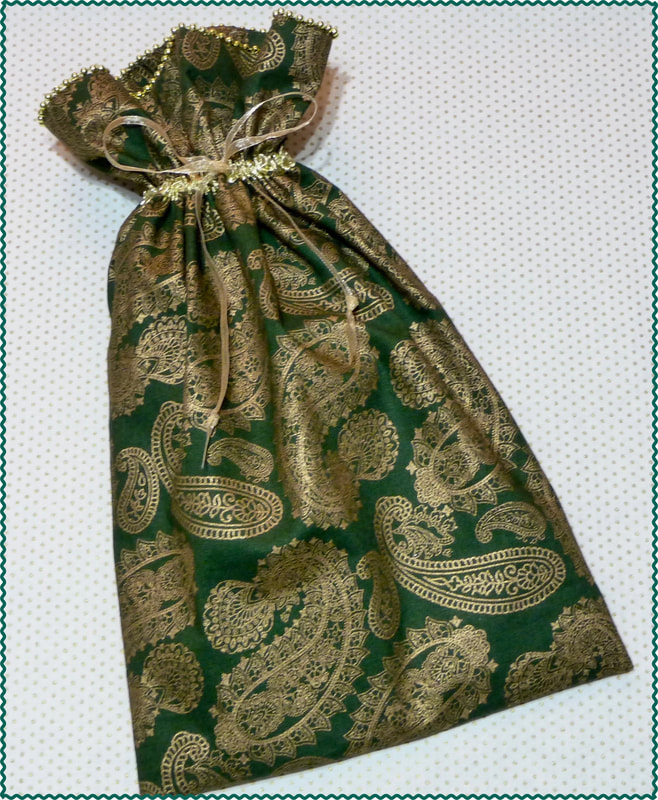
Could you use a few quick gift bag ideas? If the answer is yes, this post is here to help you stitch a few quick and easy projects. Previously posted on the Brother blog, note that these all fit into the "easy" category and are made from low cost, readily available materials. I created some of these for an embroidery machine, while others require only simple stitches on your sewing machine. First, I'll share the newest one with you.

Note: Pages on the Brother blog load slowly. Be patient when clicking on the images.
Embroidered In-the-Hoop Mini Gift Bag
Picture
This little bag is currently featured on the official Brother blog. Made from inexpensive felt with a free embroidery design for you to download, be sure to snatch the free design before December 31, 2021. Click on the above image of the bag to view and download the written instructions. Below, you'll find a recent video where I demonstrate the steps for making this bag during a Brother live show broadcast on YouTube and Facebook.


Confetti Gift Bag
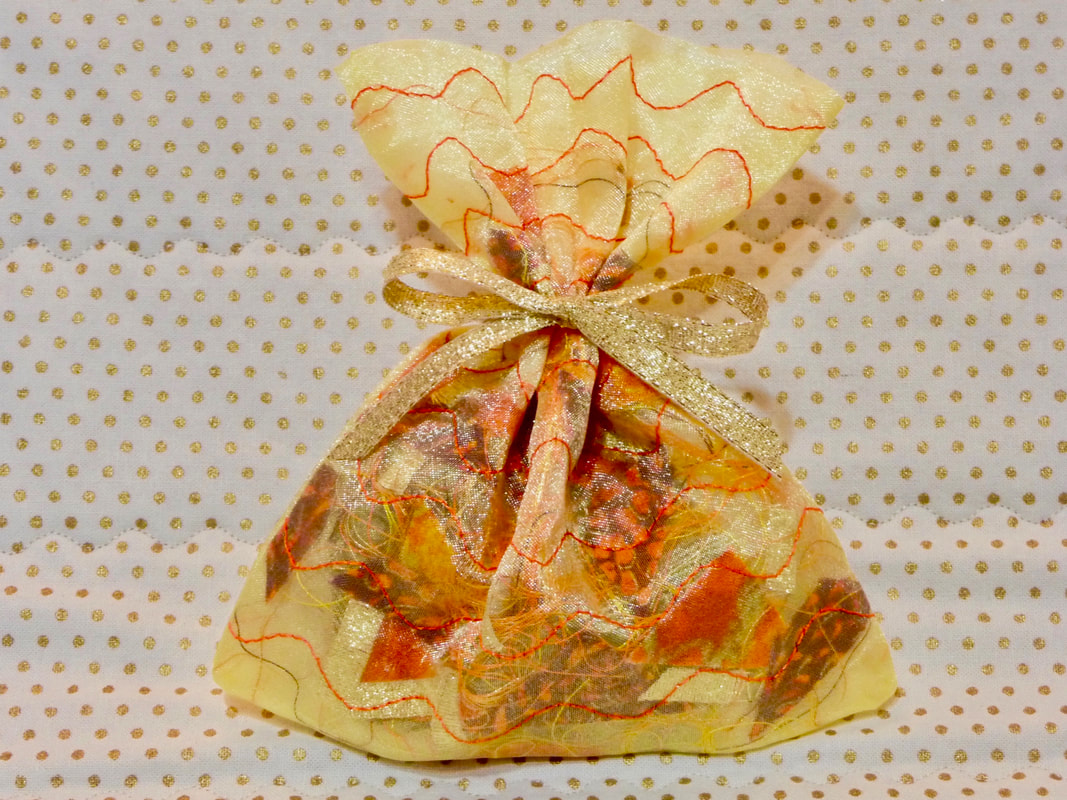
The next little bag is one of my favorites. Instructions call for small bits of fabric to make confetti and the bag itself is made from commonly found polyester organza. 
Picture
Look for multiple colors of this organza in the specialty fabric section of your favorite store. You could also consider substituting bridal tulle or netting if your intended gift will work in a bag of this type. Click on the above image to view and download written instructions. 

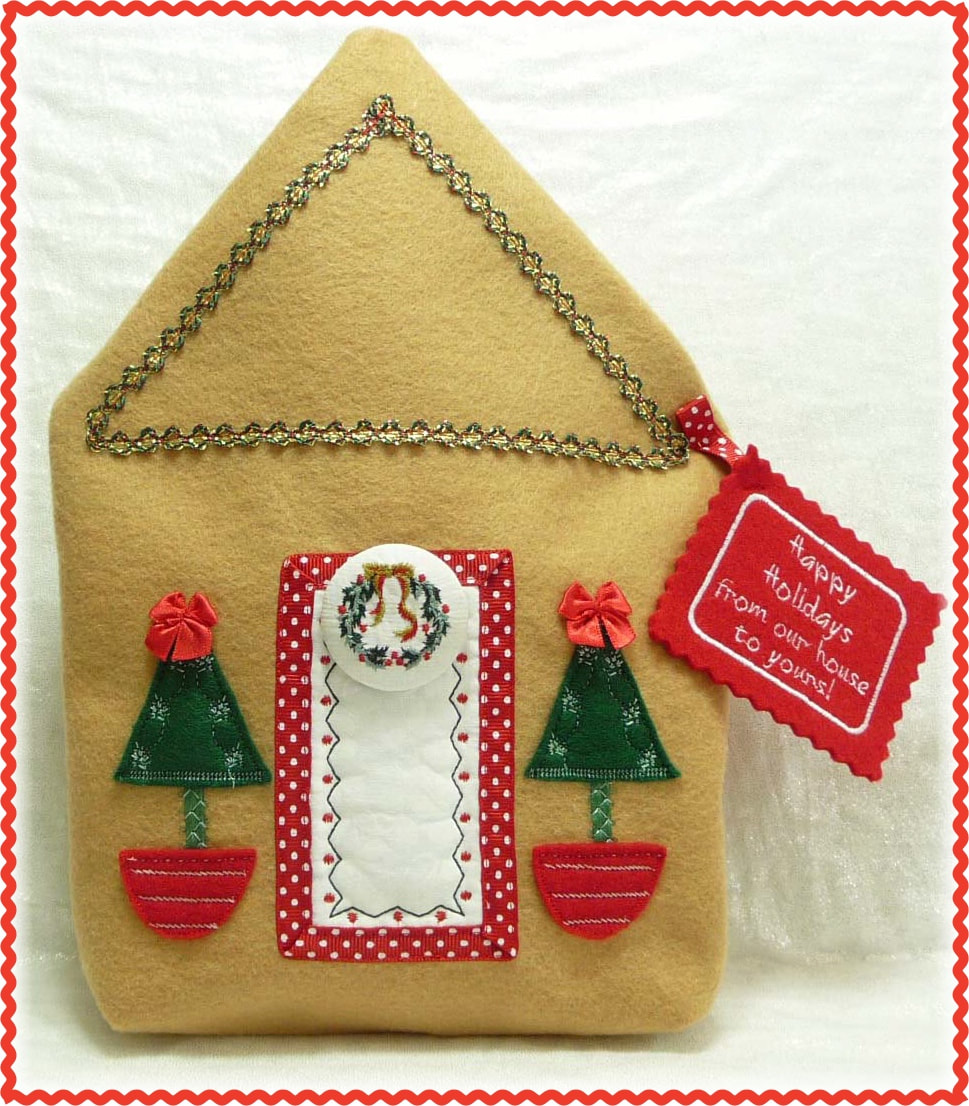
From Our House To Yours Gift Bag
This bag is one of my all time favorites. It takes a bit longer to make but is truly a gift in and of itself, one that will likely be kept and put on display. Add the family name to the roof for a fun custom touch!
Picture
In this project you'll learn some neat ways to use Frame Shapes included in the embroidery menu on all Brother embroidery machines. You only need a 4-inch hoop for this project! If you don't have an embroidery machine consider cutting appliqué shapes that mimic the ones you see here and add buttons or trim to accent the shapes. Click on the above image to view and download written instructions for the bag. 
Picture
You won't find the wreath design in the instruction file, so you'll need to download the design separately HERE.

Fat Quarter Friendly
​Fabric Bag with Pearl Trim
Picture
Sew up this bag with festive fabric and add some trim for a quick and easy last minute gift package. Instructions call for a special pearl sewing foot to apply craft pearls found on a string. You can skip this step if you like, or simply add trim of your choice. Click on the above image to view and download written instructions for the bag. ​

Gift Bag with Custom Printed Ribbon
Picture
This fifth and final bag features pearls at the top edge just like the previous bag. I made mine from polyester organza for an extra elegant look but you could use ordinary quilt weight cotton or something similar if you like.
Picture
Custom printed ribbon is a unique addition to this bag and the ribbon itself can serve as a gift tag. The Brother P-Touch Ribbon & Tape Printer is a creative tool that allows you to print custom messages on satin ribbon of various colors. Decorative patterns are built in to the printer, with themes celebrating all sorts of hobbies and special occasions.  custom printed ribbons are sure to get ooohs and ahhhs from everyone who sees your pretty packages! Check your local craft supplier for machine availablity, or look for a retailer online and find out more about this item HERE.

I hope you enjoyed this ideas for hand crafted gift bags. I'd love to read any comments you care to share!
2 Comments

Sew Tell Me . . . A Visit with Amy Barickman

10/30/2021

45 Comments

 
Follow along with me as we look into time-honored sewing techniques from the past, learn a bit of history along the way, and see how vintage can be "made modern" with Amy Barickman from amybarickman.com. Watch the video and read the entire post and you'll get a chance to win your choice of one of Amy's popular DIY courses! More info at the end of this post. 
Note that we had few technical difficulties in the first few minutes. Interview begins at time stamp 3:41.
On the 4th Monday of each month I go live on my Let's Go Sew with Joanne Banko YouTube channel at 7PM EST, where I'm joined by a special guest along with chatting friends in the live chat window. My most recent show was filled with delightful conversation, unique samples, and a glimpse into sewing history with my guest Amy Barickman. You can watch the entire show by clicking on the YouTube video you see at the top of this post. You'll also find contact information so you can connect with Amy in the show notes for the YouTube broadcast. 

​
Here, I wanted to share some highlights from our conversation, give you more sewing resources to explore on your own, and provide links to FREE downloads from Amy.

First, a little about Amy . . .
Picture
Amy Barickman is the founder of the Indygo Junction pattern company and author of the best-selling book titled Vintage Notions, an Inspirational Guide to Needlework, Cooking, Sewing, Fashion & FUN! 
Amy’s has designed over 1200 patterns and 80 books and introduced new brands such as her Vintage Notions book series and Fabriflair®, dimensional paper piecing designs.

​Recently, Prym Consumer, USA maker of Dritz® and Omnigrid® 
acquired Indygo Junction. Amy is now able to put her full attention to her passion for sharing fabulous vintage textiles & projects stitched by hand and sewn by machine. Her repertoire includes embroidery, quilts, fabric & notions, as well as DIY publications from the past with modern relevance.
Picture
Amy's Mom was a big influence. Introducing her to sewing at a very young age! You'll learn more about her mom's background in the video.

Watch the interview and you'll quickly see that Amy has a gift for inspiring creative enthusiasts to learn from the past, and experiment with new products and techniques for creating her unique vintage made modern style.
During our time together we talked a lot about projects, tips, & tidbits taken from the Vintage Notions book. 
Picture
May I say Vintage Notions is one of my all-time favorite sewing books! It's a unique collection of month by month, seasonally themed chapters with photos, patterns and project instructions, heartwarming essays, and yes, even recipes! Each chapter takes you back in time to an era when homemaking and handcrafted items were valued as special skills elevating not only the lives of the individual but the family unit and society as a whole. While the projects may be from a past era, you'll appreciate their time-honored status at home in our modern lives as well. The book is full of inspiration and projects suited for modern times, but I love picking up the book when I just feel the need to relax and unwind as I read and view pictures that take me back to a slower time.
Picture
In the book, Amy begins with a history of Mary Brooks Picken, her sole inspiration for the book. Mary Brooks Picken had accomplishments too numerous to mention in this paragraph, so I invite you to read more in the book. Mary was a pioneer in sewing education and a champion of elevating the various creative arts practiced in the home, sewing and otherwise. Learning sewing at a young age, she eventually founded The Women's Institute of Domestic Arts and Sciences in Scranton PA, attracting students from around the world. Her school helped empower women of her day to achieve status through their domestic accomplishments. 

As modern-day creatives we recognize the fact that Mary's time was obviously quite different from our own. However, we still want the world to know that creative expression, and sewing in particular, deserves high status and praise for making our own lives and indeed the world at large a better place.  
Picture
Continuing the tradition of educating and empowering creative enthusiasts, both women and men, Amy offers online DIY courses based on her fabulous collection of vintage fabrics and notions at VintageModernMakers.com. Would you believe there's even a course on Pearl Buttons? During the live show Amy told us how these beautiful buttons were made in the past. Who knew their origin was the Mississippi River?!?
​Personally, I have a small but cherished collection of both old and modern "shell" buttons as I call them. With their multi-colored hues, I find them to be the perfect choice for so many of my garment projects. I've even been known to remove plastic buttons on a ready-made blouse and replace them with pearl buttons for a quick up-cycle project.

If you love buttons too, I encourage you to read one of Amy's own posts about identifying pearl buttons HERE. You'll also find some really special button images as part of her unique digital image collection, specifically Mother of Pearl Card collection images.

Check out all of Amy's course offerings at her site, VintageModernMakers.com. Grow your appreciation and knowledge while you create practical projects. Be inspired by Amy’s interviews with textile experts as well as artists and makers! Each “Primer” course includes sewing patterns and technique tutorials. Amy shares fascinating history lessons including field trips to museum exhibits.
Picture
Speaking of printables, in the video we showed a sewing themed coloring page. This is a Freebie offered by Amy. Click on the above image to download your own copy. It would be fun to color it in and hang as art in your sewing space. Join her newsletter for more FREE printables HERE.
Picture
Yet another favorite project we touched on in the video was aprons made from men's shirts, one of the "magic patterns" included in the Vintage Notions book. I have this page bookmarked in my own copy. As an added resource you'll want to read Amy's blog titled Let's Up-cycle! A Shirt to An Apron!
​We chatted between ourselves and interacted with friends who joined us in the live chat for a little over an hour. The time flew by! Now it's your chance to re-watch or watch this video for the first time. While you're on YouTube I encourage you to subscribe and sing up for notifications on my channel, so you'll know each and every time I add a video or begin a new live show.

Now, about that promised give-away. . . Amy has generously offered my Let's Go Sew community the chance to win your choice of one of her great courses. Simply leave a comment at the end of this post, telling us what you enjoyed about the video along with one new thing you learned while watching. On Saturday November 27th, 2021, I'll put all the names into a random drawing and pick a winner to be notified by email.
I hope you enjoy the video and feel inspired by the samples shown and stories told. I'll close with a quote from Amy: 

"Let the beauty of vintage textiles & the history of handmade ignite and enrich your creative spirit!"
UPDATE!
Picture
November 27, 2021 was the day we drew a winner! Judy O'Dell wondering the random drawing and she'll receive a free online course of her choice, courtesy of Amy Barickman. Congratulations Judy!
45 Comments

Sew Your Own Custom Sewing Machine Mat

8/28/2021

7 Comments

 
Picture
Make a mat for your machine and you'll not only have a pretty surface where your machine sits, you'll have handy storage pockets for the tools you use most often. You can customize the size to fit any machine you have in your sewing space!

I have two versions of this custom machine mat for you. The first one was created using a Brother machine that falls into a category of machines that are a bit below mid range, meaning it's an affordable machine with features that can take you beyond beginner sewing. I'm referring to the Brother Pacesetter PS200T model.

You can create a similar mat using nothing more than a straight stitch for the cross hatch lines of quilting, a zig zag stitch for attaching the appliqués, and decorative stitches to define the pocket spaces. Below you'll see what the finished mat looks like.
Picture
You'll find complete instructions for this version on the official Brother blog when you CLICK HERE.
Version Two of the mat was originally featured on It's Sew Easy TV show 2006-2

This one has embroidered pockets as shown in the photo below:
Picture
Would you like to watch the show? I've included it here for your convenience. You'll find coordinating downloadable instructions when you CLICK HERE.
Pockets on this mat were created using a special fill stitch feature in the Brother Luminaire machine, with the fill added right in the embroidery mode.

Brother Dream machine owners and those who have the Stellaire model have a feature call My Design Center. Machines with this feature have the capability to create a similar pocket using shapes and fancy fill stitches. I thought you might like to know how to make this pocket style with My Design Center machines so I made a 5 minute video for you. 
Between the videos and the written instructions, you'll be able to create your own custom mat and spruce up your sewing space with something practical and pretty! Enjoy!

P.S. I'd love to know to hear from you and read your comments! If you've made one of these or plan to do so, please let me know!
7 Comments

Baby Days Sewing & Embroidery Ideas

7/31/2021

2 Comments

 
Picture
Sewing for babies and making baby gifts is always a fun way to use both sewing and embroidery capabilities on your machine!

Admittedly, the only "babies" I ever raised had four paws, fur, and answered to the call of "here kitty kitty!" However, I have made many baby items for gifts. I've seen the joy on an expecting mom's face when she received hand-crafted items perfect for her upcoming bundle of joy.

In this post I'll share some of my favorite baby days projects created for the It's Sew Easy TV show and the Brother blog where I regularly contribute as a Brother Ambassador. Follow along as I share some photos, descriptions and links to instructions.
Hooded Towel Wrap
Picture
This practical terry wrap is perfect for baby's bath time! Originally featured on It's Sew Easy TV show 1513, you can make this wrap entirely on the sewing side of the machine or choose to add embroidery for the triangular shaped hood. Packaged bias binding makes it fast and easy to finish but you can also consider making custom bias binding for a super cute color coordinated finish. CLICK HERE to watch the video on my YouTube channel. Download a PDF copy of the instructions with an easy step-by-step method for an inconspicuous seam on continuous bias binding HERE.

Machine Embroidered Bath Mitt
Picture
Make this quick and easy bath mitt using a wash cloth and a bit of embroidered ribbon trim. The little duckie design is available as a free .pes design download from Brother, included with the project instructions. This fits in a 4-inch hoop, making it ideal for new or entry level machine embroidery owners. CLICK HERE to download instructions and the design courtesy of Brother Sewing Machine Company.

Baby Bottle Cover
Picture
Another quick and easy project, this baby bottle cover is super cute with added embroidery and it can be easily trimmed with something simple like decorative stitches or classic rick rack. To learn how to make this CLICK HERE to watch It's Sew Easy TV show 1503. You'll find the instructions for measuring and making a custom sized cover, plus a free bonus burp cloth pattern HERE on my site.

Satin Trimmed Plush Blanket
with
Neatly Finished Mitered Corners

Picture
This blanket has to be one of my all time favorite baby gifts to make and to give. Simply cut a rectangle of one or two fabrics and purchase a package of satin blanket binding and you're on your way to making a blanket with a professional finish and a soft edge baby will love to cuddle under. Once you learn the technique for mitering the corners you'll likely keep this as one of your "go to" baby gifts for future baby showers and gift giving. I spent quite a bit of time working out the details for making this easy and effortless. I suggest you watch the video HERE on this page and download the included written instructions for step by step photos to help you master this technique.

Quick and Easy Banded Burp Cloth
Picture
Yet another burp cloth, cos what new parent can't use more of these!?! Grab a package of cloth diapers, some bright strips of fabric and decorative thread and you are ready to whip up one or a half dozen in no time at all! I  recently created this project for the Brother Stitching Sewcial blog. You'll find the instructions HERE. Design ideas include picking a few favorite baby themed embroidery designs, choosing fun sayings to use with built-in lettering, or consider using just decorative stitches or fabric appliqués if embroidery is not in your repertoire.

I hope you enjoy these baby days projects! Great for gift giving but quick enough for  a creative parent to be to make as well!

Save the instructions so when you here the news that so and so is expecting you'll be ready to stitch something cute, made with your sewing skills, love, and a little help from your sewing machine!
2 Comments

Spruce Up YOur Sewing Space: managing Magazines

7/3/2021

1 Comment

 
Picture
I'm starting the slow process of cleaning. clearing, clutter busting and rehabbing my sewing space. I have no set deadline and plan to move at a pace that does not stress me out. I thought I would share so of my ideas and invite you to join me in the journey in the hope that it will help you to get the clutter under control, perfect your workflow, and generally make your creative space more inviting. I want you and me too, to feel inspired and rejuvenated each time you enter it! 

Today we tackle the menagerie of magazines. I should start by saying that I have gone through the process of culling magazines and sewing periodicals many times in my sewing life. Before easy access to the internet became commonplace, we didn't have any other way to learn and be inspired with reading material except for magazines and books. For almost ten years I had the privilege of contributing to what I considered to be the premier machine embroidery magazine, Designs in Machine Embroidery. Copies of my contributions are on my must keep list. The batch of magazines that remain are going through the should it stay or should it go process. Below you'll find my best list of ideas and methods for tackling this stack of shiny paper full of pretty pictures and golden information.
How to Get Started
​Begin by sorting a pile of keepers and discards. Think through your list of sewing friends that may benefit from magazines you are through with. Discards may be newfound treasures for them.
 
Now it’s time to go through the keepers pile. If you don’t have the dreaded FOMO (fear of missing out) syndrome like I do, you may be able to breeze through the index of your saved magazines to see if anything is there that still interests you just by looking at the titles in the index. You may be like me and want to leaf through page by page just to make sure you are not in fact missing out. Now you are ready to plough through and see what you can’t part with. See if any of the following ideas work for you.
  • Clip and File - Once clipped, file in a file cabinet, file box, drawer, or stand up organizer designed to hold magazine or file folders. I like to use a simple A to Z system. If I’m looking for zipper tips, I simply look for the label that includes Z and I’m sure to find what I want. For yet another idea, buy clear sleeves for a binder and store the articles in binders by alphabet or by categories. These methods work for chopped up pieces of articles or multi-page articles you want to keep for future reference.
  • Snap and Store – Snap a picture of a tip or paragraph or even a picture you want to keep and then file it using your favorite digital formula. For me that is yet another A-Z system on my computer. Tip: If you are using a Mac, you can open your picture file using the preview program, add text or drawing to emphasize areas and even export it as a PDF. I know there are other Windows based programs that allow you to do this as well. One that I use for both Mac and Windows is called SnagIt.
  • Scan & Store - If you have access to a flatbed scanner, simply scan in the file, save it as a PDF for easy printing should you choose to print at a later date, and once again, file it in your computer as digital media.
  • Protect & Keep Intact - If you find a magazine that you can’t bear to part with and want to keep intact, consider putting it in sleeves made just for that purpose or make your own from clear vinyl. I have even considered purchasing two-page menu covers for magazines I know I will never want to part with. I'll keep you posted on the progress of that idea.
  • Search Before Saving - Last but not least, if you're seeking to cut down on the quantity of items you are keeping, before you save an article do a quick online search to see if the information exists in digital form. If you can download and save the info you won’t need to store the hard copy. Also, think about the books you already own. Perhaps the same or similar technique or information is already archived in a book you plan to keep. By the way, if it is really important information be sure to have a digital back up copy as well.
P.S. If your favorite magazine is available as a digital subscription you may want consider subscribing to digital downloads to keep from repeats of this sorting process. I won't tell you that I never buy magazines anymore. However, I have a penchant for not letting them go and while I enjoy an occasional magazine as a treat, I don't feel the need to keep my sewing "pantry" full of them.
I hope you found some of these ideas helpful. I'd love to hear your thoughts and ideas about managing the menagerie of magazines!
1 Comment

Sew Tell Me Interview With Ellen Miller

6/30/2021

0 Comments

 
Picture
My most recent Let's Go Sew LIVE show on YouTube featured Ellen Miller as she shared delightful samples found in the pages of her book titled Creative Couture embellishment.

I first met Ellen on the set of It's Sew Easy TV and helped configure the machine so she could demonstrate bobbin work and Sashiko style stitchery. Ellen was used to sewing on an industrial straight stitch sewing machine and quickly adapted to the fancy schmancy computerized Brother machine she needed to use for taping the show. This was Ellen's debut appearance on TV and if you listen to her tell the story, she did not expect to have to sew at all. However, she was thoroughly prepared to show all of her step-by-step samples. She quickly adapted to the show format and did both, showing and sewing Sashiko samples. Watch show 1505-1 HERE on the KS Productions website and you'll walk away with a great appreciation for Ellen's detailed instructions and inspiring samples.

I knew Ellen would be a great guest for my Sew Tell Me interview series. Her book is filled with incredible techniques that would translate well into special embellishments not just for clothing but for home decor and art quilts as well. Watch the video and you'll see Ellen show samples from the book and share tips for easy embellishment.

Ellen also told us all about some great resources for beads, fabric, and trims. Below are a few of her favorites.
  • Beads:
https://www.firemountaingems.com
  • Online Fabric Resources:
www.emmaonesock.com
www.gorgeousfabrics.com (Ann Steeves)
  • ​Brick and Mortar store in Midtown Manhattan:
New York Elegant Fabrics
www.newyorkelegantfabrics.com

In the back of her book you'll find even more resources, plus a glossary for techniques that will enrich your sewing knowledge and pique your interest to learn more.

Below is a link to a replay of the YouTube show on my channel:
Hope you enjoy the interview! If you have more questions for Ellen please leave them in the comments section at the end of this post and I'll forward them on so we can get answers directly from her.

Follow Ellen at her website here:
https://creatingembellishment.com

Find information about ordering Ellen Miller's Creative Couture Embellishment book here:
https://creatingembellishment.com/the-book/​

Contact Ellen directly here:
https://creatingembellishment.com/contact/​
0 Comments

Preventing Puckered Embroidery

6/12/2021

2 Comments

 
Picture
Presented on the Brother Live show Tuesday June 8th, 2021. 
My friend and fellow Brother Ambassador Angela Wolf, hosts the twice weekly Brother live shows and invited me to share tips for preventing embroidery puckers on this recent show. Below, you'll find an outline of the tips presented. I went into a lot more detail and showed lots of samples during the show.
Picture
  1. ​Compatibility is key – match design density and fabric weight.
  2. Carefully consider placement.
  3. Use bonded backing on thin or stretchy fabrics.
  4. Add interfacing or batting, then float tear-away underneath the hoop.
  5. Stitch on a separate piece and then add to project.
  6. Stiffen fabric with a liquid, wash-out stabilizer or starch.
  7. Match hoop to design size for a snug fit.
  8. Preset hoop tension.
  9. Consider planned puckers with pre-quilted fabric.
  10. Combine light weight layers of stabilizer.
Angela and I enjoyed having a lively conversation. As usual, comments coming in from viewers always spark good sewing conversation and lots of clever questions. 

During the show, I happened to mention the benefit of embroidering on pre-quilted fabric. I shared one of my favorite projects for single faced pre-quilted material, a custom hanger cover. Many asked for instructions so I'm including a link to the download HERE. You'll also find a 2 minute coordinating video showing a variety of hanger cover samples. These are quick and easy to make for your self or to give as a welcome gift. 
Back to the theme of the show, preventing puckers. Click below and you can watch the entire one hour and  six minute video to learn some of my all-time favorite tips for keeping puckers from spoiling your pretty embroidery projects.
Looking for even more in-depth information of preventing puckered embroidery? Many of my tips were included in a recent It's Sew Easy TV show. CLICK HERE to watch Preventing Puckers on It's Sew Easy TV show 2012-3. You'll find a detailed tip sheet I wrote to coordinate with this 7 minute show.

I'd love to hear about your embroidery experiences, with or without puckers. Please leave your comments below!
2 Comments

Sew Tell Me Interview With Beth Sweet

5/1/2021

1 Comment

 
Picture
Conversations with Industry Experts and fellow Sewing and Embroidery Enthusiasts just like YOU!
Picture
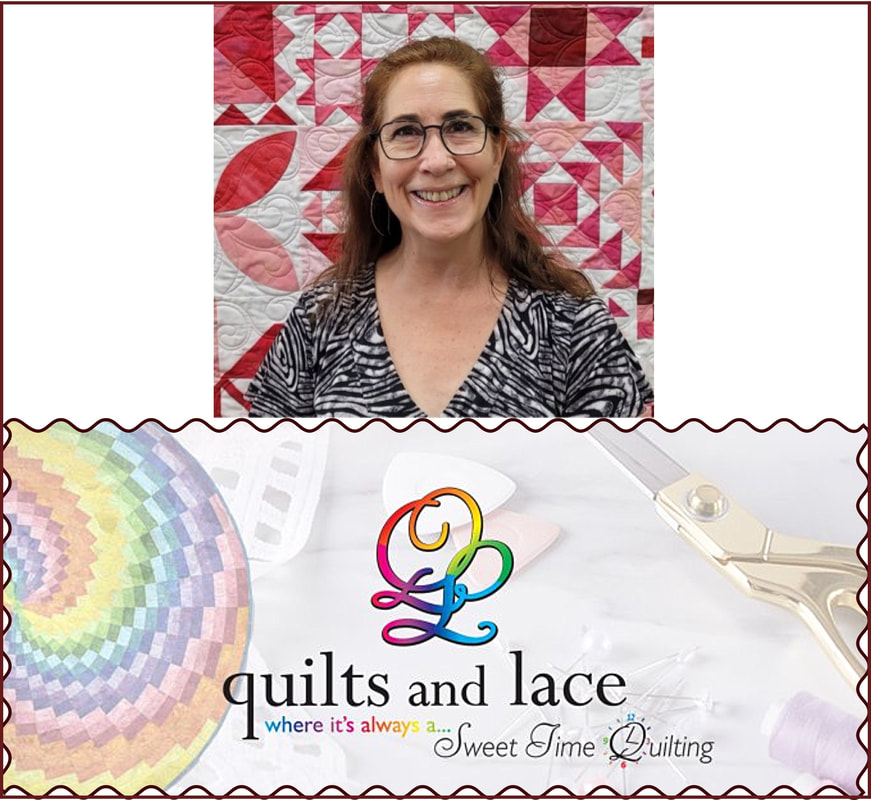
On the fourth Monday of each month you can look forward to a Live YouTube show on my Let's Go Sew with Joanne Banko YouTube channel. In this post you'll find the replay for my April show along with follow up details and extra information I thought you would enjoy. This month my guest was Beth Sweet, owner of Quilts and Lace quilt shop in Melbourne, Florida. You can read Beth's full bio at the end of this post.
I met Beth Sweet a few years back while attending a Brother convention. We had a warm relationship from the very start and knew we would eventually connect one day for a special event.   
Picture
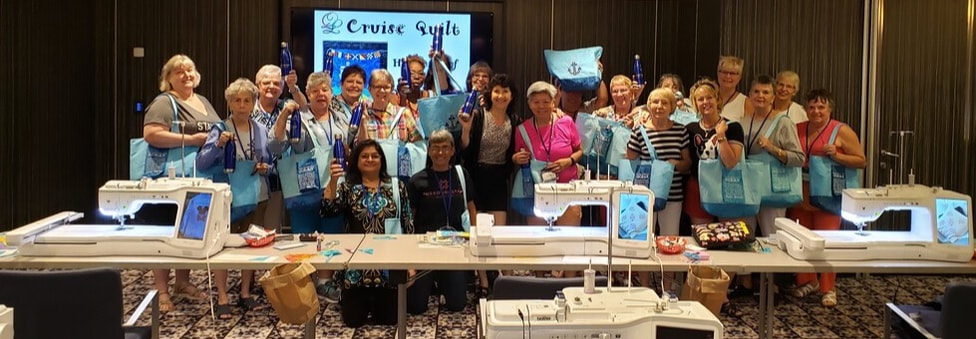
Well, it turns out Beth planned a really big special event in the fall of 2019, putting together a Caribbean cruise with myself, Beth, and Aira Kekäle teaching 21 enthusiastic sewing enthusiasts as we sailed, sewed, and had a wonderful time visiting island destinations together. Allan Reid (aka Aira's hubby) was our invaluable assistant throughout.

Picture
Beth and I have stayed in touch ever since! In this new series of interviews, I knew Beth would be the perfect person to talk to about patchwork and machine stitchery both for seasoned quilters and those who are just starting to explore the world of quilting.

Beth shared her own personal sewing journey and told us how she actually did not like sewing at all when she initially started in school, and how she ended up being passionate about piecing quilts. We talked about many ways to get started with quilting and continue advancing your skills with tips, tricks, & tools. She showed us inspirational samples and gave us a peek into classes offered in person for those who are near the shop, and online offerings for everyone else interested in sewing new and fun projects.
April Sew Tell Me Replay!
This show is loaded with tips and ideas! Here is a replay of the 1 hour & 20 minute show recorded on Monday April 26, 2021:
Highlights from the video include:

Quilts and Lace Class schedule:
https://www.quiltsandlace.com/pages/classes​
​Quilts and Lace Class descriptions:
https://www.quiltsandlace.com/pages/events


Top quilting books for "newbies" and those looking for easy to sew quilt patterns:
Eleanor Burns Quilt in a Day - Log Cabin Quilt
Eleanor Burns Quilt in a Day - Snowball Quilt​


Quilting with a walking foot and a Dynamic Walking foot:
CLICK HERE for a tip sheet on the Walking foot.
CLICK HERE for more info on Dynamic Walking foot.


Using Mary Ellen's Best Press Spray to pre-treat fabrics for sewing.

Beth's favorite tool for finishing bias binding:
CutRight Bind Up tool.

Beth's favorite quilt pattern, her "signature" spiral quilt from the book titled: Quilts Without Corners.

​Another favorite: One Block Wonder


Ideas for Creating Quilt Labels can be found in the posts below:

Sewing with Tiny Fonts ​(On the Embroidery side of the machine)
Stitching Multiple Lines of Built-in Lettering (On the sewing side of the machine)

You'll find Beth Sweet at Quilts and Lace Quilting shop, 7720 North Wickham Road Unit 111​-114, Melbourne, FL 32940, Phone (321) 622-8602

Interested in any of the classes and products mentioned on the show? Connect with Quilts and Lace via the following links:
  • Website:https://www.quiltsandlace.com
  • Facebook Page: https://www.facebook.com/QuiltsandLace/
  • YouTube channel: https://bit.ly/3e8IiaJ
More about Beth Sweet . . .

Picture
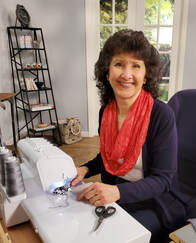
Here she is posing at the front of the cruise ship Harmony of the Seas in October 2019. Always up for an exciting adventure, Beth provides exciting and enjoyable sewing experiences for her many valued customers at Quilts and Lace.

So, how did her journey lead her to owner/operator of Quilts and Lace? Here is the story in Beth's own words:

Throughout the years, I have had many jobs that I believe contributed the bits and pieces that prepared me for owning a quilt store.  Hard to fathom that my first job out of college selling switches for Micro Switch of Honeywell to other sales positions, being a wife, mother of two, substitute teaching, volunteering in the community to most recently working at quilt stores led me to have, I believe, a few of the skills needed to owning a business!

I knew that I loved to teach and appreciated the variety and challenges that happen every day at a sewing store.  Because of this and due to the joy I receive when working with people, learning constantly about fabrics, notions, social media, computers and how to use the sewing, quilting and embroidery machines, I decided to write a business plan. I found that developing ideas for how I would manage a quilt store very exciting. A wonderful series of events led to me working at the same store I now own. Through the guidance and support of the previous owners, I purchased Quilts and Lace on November 22, 2016 and became the new owner of Sweet Time Quilting LLC DBA Quilts and Lace! 

1 Comment

Serger Do's and Dont's

4/17/2021

36 Comments

 
Picture
As seen on It's Sew Easy TV show 2101-1
Is your serger collecting dust? Recently, I asked a group of sewing enthusiasts what they have been doing with their serger. One honest friend replied collecting dust! I'm afraid this is all too common, especially when someone is new to the world of serging and is intimidated by the dials, knobs, and general strangeness of this machine when compared to a sewing machine. After all, most of us can sit down at just about any sewing machine, thread it up and at least sew a straight seam.

Sergers, also known as overlockers, seem to look just a bit different and while there are some similarities between sergers and sewing machines, they are truly two different animals. 

In this post I'll share some simple Do's and Dont's to follow. Whether you are a seasoned serger stitcher or a newbie when it comes to overlockers, I think you'll find a tip or two that will work for you.
Picture
Do's and Don'ts for Standard 4-thread Sergers
Serger Do's - What you should do.
  • Use good quality synthetic cone thread. Lesser quality threads are made up of short fibers, break easily, and leave more fuzz. You can also use regular spools of sewing thread in your serger if you're in a pinch for color matching your fabric. In this case, I prefer to use a thinner thread such as Mettler or Guttermann.
  • Practice serging with threads that are color matched to your machine's tension dials to become familiar with making tension adjustments. 
  • Change needles frequently, using correct type & size for your machine. A universal size 14 is considered pretty standard but I sometimes use a size 11 or 12.
  • Insert needles in the proper direction and up as far as they will go. When removing needles use the appropriate screwdriver and loosen the screw just enough to remove the needle. Leave screw at that semi-loose position until you put another needle in its place. If you tighten down the screw each time you remove a needle you may eventually form a burr. A burr can prevent needles from going all the way up into the hole.
  • For most standard sergers you will want to thread machine in this order: Upper looper first, Lower looper second, and Needles last. In general, the right needle is threaded first and the left needle second. If either of your loopers need to be re-threaded it is best to unthread the needle(s), rethread the looper(s), and then re-thread the needles last. If you don't want to un-thread and re-thread, then you’ll need to make sure the needle threads are brought to the top of the throat plate and placed under the foot to the back of the machine, after you re-thread a looper and before forming a stitch. This is VERY important! If needle threads are caught behind a looper when your loopers are re-threaded, the looper thread will simply break again. Following this rule will prevent lots of serger frustration.
  • Oil as specified in the manual. Clean face and lower area of machine with a soft brush. I like to use a 1-inch paint brush for cleaning the face and a stiffer nylon sewing machine brush to clean the blades and lower area. I also use a vacuum while brushing and avoid canned air.
  • Change needles regularly. You can usually "hear" a needle get dull. a dull needle makes a popping sound. Dull or damaged needles can also snag fabric and cause runs or holes.
  • When re-threading or starting off with a new stitch formation, take the first few stitches by hand to make sure the stitch forms and everything is running smoothly before using the foot control. 
  • Make some sort of obvious notation to serve as a warning if you disengage the cutting blade for a particular technique. I like to write a note on post it note paper that says Warning! Blade Disengaged! I leave it on my machine until I have re-engaged the cutting blade. 
  • Test your stitches on long scraps of the same fabric before sewing on the actual project. You will waste more thread with short test pieces as you'll have to chain on and off while testing. Use a long piece, stitch a few inches, check, adjust as necessary, and continue until you're satisfied with your adjustments. 
  • Avoid using pins with a serger or be sure to use them parallel to the seam, far away from the blades. Pins and serger blades are mortal enemies. Keep them away from each other at all costs!
Serger Don'ts - What you should NOT do.
  • Don’t turn the handwheel backwards once needles have been threaded. You will tangle the threads and make a mess. 
  • Don’t pull hard on the fabric from the front or back. This can cause the needles to hit the loopers, causing burrs on one or both. 
  • Don’t sew beyond the edge of the throat plate when the cutting blade has been disengaged. Remember the warning system described above.
  • Don’t re-thread the machine without following the proper threading order. Remember the rule about always threading needles last!
  • Don’t use inferior quality threads or old cotton threads. Cotton thread is usually a poor choice for any serger project. Tension on serger thread can make cotton snap and break easily.
  • Don’t neglect oiling! Most sergers require some, if not more oiling than you may think. If your serger has been sitting for a while be sure to oil before using. Too little oil is not a good thing but too much is not good either. Check your manual for specific oiling details. I like to periodically oil the blades of the serger with a cotton swab. This helps clean off residue and makes blades last longer.
  • Don’t serge at an erratic pace, meaning fast, slow, fast, slow. Instead, stitch at a steady, even pace. Stitching at an even pace will make the threads jiggle less and the tension will be more even. This is particularly important on sergers that are more in the budget range price wise.
My final don't? Don't let your serger collect dust. Stay tuned for more tips and tricks for using your serger to the fullest. CLICK HERE and check out this Let's Go Sew tip sheet and learn more about how sergers and sewing machines differ.

Want to see a video with tips for when to sew and when to serge? CLICK HERE to watch Sew it or Serge it, as seen on It's Sew Easy TV show 2101-1. On this show you'll see me demonstrate a variety of techniques using both the sewing machine and serger.

Would you like a PDF version of the Do's and Don'ts to print and keep by your machine? CLICK HERE.
36 Comments

Walkin and Rollin Feet - Even Feed Accessories Make Your Sewing Easier, And More Efficient!

4/10/2021

11 Comments

 
Picture
Brother Ambassador
As a Brother Ambassador, I enjoy helping sewing enthusiasts make the most of their machines and the available accessories that come pre-packed with the machine or are found as optional accessories. If one of these accessories interest you, I suggest checking with your local sewing machine shop to see what's available for your make and model.

We answered lots of questions during the show, and I welcome any additional questions in the comment section at the end of this post.

Below, I'd like to provide links to a few extra resources to compliment information presented on the show.
More About the Walking foot
Picture
For more details on the walking foot I invite you to CLICK HERE to download Let's Go Sew Tip sheet titled the Wonders of the Walking Foot.

What's this?!? A Newfangled Walking Foot!
SA101 - The Brother Dynamic Walking Foot
Picture
Designed for computerized machines with a 7mm throat plate opening, you'll learn more about what makes this foot special during the show. One big advantage is the ability to sew decorative patterns with this foot. Standard walking feet were only designed to sew forward with a straight stitch or a normal zig zag. Check the manual included with this foot and you'll see decorative patterns recommended for use with this foot. 
Picture
You'll find a link to the actual manual that comes with the foot below:
SA101 Dynamic Walking Foot Manual

​
This manual shows how to attach this low shank foot to a high shank Brother machine, using the "S" adapter. Learn more about this adapter HERE in a previous Brother Stitching Sewcial blog post.

​Looking for some videos showing the Dynamic foot in action? Check out these links form the Brother Support Sewing YouTube channel:
Set-up Basics for Dynamic Walking Foot
Needle and Thread Combinations
for Sewing with Dynamic Walking Foot

Adjusting Decorative Stitches for use with the Dynamic Walking Foot

Next up, the Digital Dual Feed Foot
The Digital Dual Feed Foot, also known as the Brother MuVit Foot, was included in the tutorial. Below, you'll find a video showing basic set-up for this attachment from the Brother Support Sewing YouTube channel.
This foot has several accessory options that snap on, including a couching attachment for embellishment with cording and yarns, an open toe sole, and 1/4-inch sole with guide, and a Stitch-in-the-Ditch sole. You'll also find quilt guides that attach to the foot.

Since this accessory plugs into the machine, it is adjustable using the setting mode. In addition, connection to the machine means  you simply can't choose a stitch that is incorrect. It's adjustability and constant contact with the fabric also makes it very special. There's a lot to learn about this very unique attachment. I invite you to explore the links below to learn more.
Getting to know the MuVit Dual Feed Foot Part One
posted on the Brother blog CLICK HERE

Getting to know the MuVit Dual Feed Foot Part Two
Accessory SA206 Quilting Guide Set

posted on the Brother blog CLICK HERE

MuVit Dual Feed Foot
Accessory SA204 
Ditch Quilting Foot
posted on the Brother blog CLICK HERE

Quilt-in-a-Pillow created with various
MuVit Dual Feed Foot accessories

posted on the Brother blog CLICK HERE​

Coat with couched collar as seen on
​It's Sew Easy TV show 1405-3,
​featuring Dual Feed couching attachment.
CLICK HERE for a tip sheet that coordinates with the above video.

I hope all of the above info helps you make the most of whatever "walkin" or "rollin" foot is available for your machine. Feel free to leave your comments and questions below.
11 Comments

Sew With Your Feet - Explore the wonders of eight different Accessories

4/1/2021

8 Comments

 
Hello sewing friends! This blog contains highlights of a presentation that took place during the fourth anniversary celebration of the Quilts and Lace sewing shop in Melbourne Florida.

I had a virtual meet-up with Beth Sweet, owner of Quilts and Lace, as customers and friends shopped and celebrated in her store on April 1st, 2021! If you missed the live show, you can catch a replay HERE on Facebook. Below you'll find a re-cap of many of the tips I shared for using eight different sewing machines accessories. I matched up each accessory with a blue hyperlink link to a project or set of instructions. Simply click the links to learn more about each accessory. Enjoy!
So many accessories for so many different machines! Follow along as I outline each one, sharing projects and ideas for using these accessories for embellishment and utility sewing. Remember, there's a tool for every task! Knowing the power and potential of each accessory will help you experience successful sewing! These tools make sewing faster, easier, and more accurate so you can have more fun when you sit down to sew!

The Felting Attachment
SA280
Picture
This flower accent was created with wool felt as the base, with wool roving and yarn felted into the base. A big center bead and feathers finish off the accessory.

As seen on It's Sew Easy TV show 1411-2. You can watch this show on my YouTube channel HERE.
​To set up for the felting attachment, barbed needles replace the machine needle and the machine is fitted with a new bobbing cover and dust cup, plus a finger guard that serves as a feeding attachment for felting with yarn. All the pieces and parts you need for machine felting come inside the box, including extra needles.

This accessory is specifically made for certain machine models. I can count a combination of about ten past and current Brother models compatible with the felting attachment. Brother dealers have the most updated information with a list of models that work with this attachment.
Pay attention to the machine set-up outlined in the manual included with the package. You won't be using any thread in the top or bottom, and the bobbin case gets replaced with a special cover and a small cup to catch excess fuzz. Selecting stitch C-01 and checking the position of the barbed needles is essential before you start felting.

Felting is really a very simple process. You may have seen the tools used to create felting by hand. Machine felting is much faster and doesn't require the muscles it takes to felt using the hand method.

For felting, fibers, yarns, and materials are pushed into a base as you layer them and move across the base as if you were darning or doing free motion stitchery.

Here is a list of suitable fabrics for the base:
  • Craft Felt
  • Wool Felt
  • Denim
  • Fleece
  • Silk Dupioni
  • Lutradur
  • Non-tear Stabilizers
Don't be afraid to experiment with a variety of combinations.
​
​For more information, you'll find a detailed video presented by Quilts and Lace expert instructor Aira Kekäle on their Facebook page HERE.

Five Foot Embellishment Pack
This box includes five fabulous feet in one package! I reach for many of these feet on a regular basis. Let's talk about one at a time. 
#1 Gathering Foot
Pajama Bag with Ribbons and Ruffles
Picture
Picture
The gathering foot is the only one in this kit that attaches with a screw. It's a low shank machine, so you'll need the "S" adapter if you have a high shank Brother.

Th bottom of this foot is designed to push against the feed dogs on the machine.  When combined with an increased upper tension and a stitch length of 3-4, light weight fabrics are evenly gathered with this foot. If you'd like to gather one layer while sewing to a second, un-gathered layer, simply place layer to be gathered against the feed dogs and guide flat, un-gathered layer into the slot on the foot. Note that these gathers are not adjustable when finished.

Tip: Keep your index finger behind the foot as the fabric strip advances to push in slightly more gathers.

#2 Non-Stick Roller Foot
PVC Apron
Picture
The Non-Stick roller foot is designed to help in what I call "sticky situations." There are times when a regular presser foot gets stuck on unusual fabrics such as vinyl, leather, suede, and waterproof tablecloth material.  

Materials like the PVC used for the apron have a vinyl coating and this slick foot will glide and roll right across the fabric without sticking. It's ideal for topstitching, or any time you are sewing against a surface that clings to the standard foot. 

Tips: For sticky fabrics that must be sewn against the feed dogs, layer with a piece of tear away stabilizer for smooth sewing, and carefully tear away when finished. Consider making your own vinyl coated fabric using Therm-o-Web Iron-on clear adhesive vinyl. 
#3 Stitch-in-the-Ditch Foot
Patchwork Placemat
Picture
Picture
The Stitch-in-the-Ditch foot has a long, prominent blade directly in the center of the foot. It's designed to run right along the point where the seam is joined, also known as the ditch, or well of the seam. The blade is springy so it can cross over layers with seams.

I used this foot to anchor the layers of my black and white pieced placemat, sewing each square where the seams are joined together. By the way, the placemat itself is made from cut up napkins, decorated with rows of fancy stitches. I wanted my coordinating napkins to match so I bought extra napkins and used them as fabric.

This is a "must have" foot for anyone who does quilting or patchwork. 

Tip: Most of the time this foot is used with a center needle straight stitch, but you can move the needle to a different position to sew  a specific distance from the seamline.

#4 The Edge Joining Foot
Pashmina with Ribbon Trim
​As seen on It's Sew Easy TV show 1703-1
Picture
I love decorating pashmina scarves with embroidery and added ribbon! My book titled Wrapped in Embroidery includes three pashmina scarves with added accents from embroidered fabric and silk ribbons. I created another version for the TV show, using the edge joining foot to easily and accurately add ribbon trim. I lined up the guide on the foot with the edge of the ribbon and moved the needle off center for even edge stitching on the ribbon.

​Watch the entire show HERE on my YouTube channel.
Picture
This foot can be used with both utility and decorative stitches. It's perfect for joining multiple strips of fabric, trim, lace, and ribbon. The completed strip below was used as a border for a pillowcase.

See more about the edge going foot HERE on It's Sew Easy TV show 905-3.
Picture

#5 Piping Foot 3mm - 6mm
Pretty Piped Potholders
Picture
This newer style piping foot allows for piping cord that's thicker than the standard dressmaker weight found in packages. It's easy to make your own piping with fabric and cording 3mm to 6mm in diameter. The potholder projects shows how to make bias trimmed piping from a small square of fabric.

​Notice the dual channels on the bottom of the foot. These channels come in handy when you want to sew your piping on the right or left side as you position the layers at the machine.
Check out the piped chair cushion project for It's Sew Easy TV show HERE. I think you'll find the decorative piping technique an interesting way to perk up home decor projects.
Picture

Adjustable Blind Hem Foot
​SA133
Take it Anywhere Tote
Picture
Naturally, the blind hem foot work perfectly for standard blind hems. The adjustable guide helps fine tune the foot for a wide variety of fabric types and weights.

I like to use this blind hem foot as adjustable edge guide for topstitching and edge stitching. You can't see it in the photo, but this foot helped me stitch the tote very close to the finished edge, giving a fine finish and keeping the lining layer tucked inside the tote bag.

I also used this foot to stitch the self-fabric fish on the double layer flannel baby blanket shown below:
Serge & Sew Baby Blanket
Picture

Picot Foot
​SA149
Children's Custom Hanger Cover
Picture
The Picot foot is designed to create a narrow rolled hem on lightweight fabrics. The small scroll on the foot rolls the raw edge under as fabric is fed into the slot. While a standard rolled hem foot is suited for a straight stitch, this foot is designed to be used with a small zig zag stitch. The deeper groove on the bottom lets the fabric slide under the foot while the hem is formed.

​Check the settings shown below and you'll see that the upper tension is increased to pull the zig zag over the rolled edge. The resulting hem has a scalloped appearance. 
Picture
I hope you enjoyed this summary of eight different Brother accessories! Feel free to leave comments or questions below.
8 Comments

Sew Tell Me Interview with Jaime Ruckel from The Sewcial Bee

3/27/2021

1 Comment

 
Picture
Conversations with Industry Experts and fellow Sewing and Embroidery Enthusiasts just like YOU!
This is a followup to the live show presented on the fourth Monday of March. Each month you can look forward to a Live YouTube show on my Let's Go Sew with Joanne Banko YouTube channel HERE. If you haven't already, I encourage you to subscribe and get notifications for future shows.
​
Monday's show featured Jaime Ruckel. Jaime is known for running her own Sewcial Bee Facebook page and The Sewcial Bee Etsy shop, where she sells some very unique patterns, including slippers for the entire family, specialized caps to sew for welders, bikers, and more! Jaime is also founder of the Facebook Sew it's for Sale group, where fellow sewing enthusiasts can buy and sell sewing related items. It's a popular spot for finding fabric treasures and for selling your stash.
Jaime and I had a delightful conversation that lasted well over an hour. ​Live chat during the show was full of active, fun, and friendly, folks! 
This
post includes a few highlights and links we talked about during the show. You'll also find the video posted here too. If you come up with any questions while watching please feel free to leave them here and I'll make sure they get answered.
Watch the replay below!

Lots of tips, tricks and resources were part of the conversation, not only from Jaime and myself but also from those who joined us. Here are some highlights:

Jaime's favorite 1 yard T-shirt top:
Ellie and Mac patterns - Everyday Tee pattern

We talked about sewing undergarments and swimwear. Here is a link to a great resource for notions including rubber elastic: SewSassy.com

Favorite leggings patterns came up as a topic and two were mentioned, Sandra Betzina's Vogue pattern 1376 and Emily Thompson's Life Sew Savory leggings pattern HERE.

Special pressing tools came up, made by Cheryl Avery's husband. You can find out more directly when you visit Jaime's The SEWcial Bee Facebook page.

Last but not least, the burrito method for making pillowcases came up and I promised to share  instructions I contributed to the Brother blog as a Brother Ambassador. You'll find a full post HERE.


Looking to connect with Jaime? You'll find her at the links below:

Etsy shop: 
www.etsy.com/shop/TheSewcialBee

Facebook The SEWcial Bee site:
​www.facebook.com/SEWcialBee/

Private SewItsForSale Facebook Group:
www.facebook.com/groups/sassysewingsales/about

(Note: You'll need to request being added to the group)

You'll find Jaime's YouTube channel HERE

Many thanks go to Jaime for being such a wonderful guest!
1 Comment

Let's Go Sew Snippets and Sewing News

3/21/2021

1 Comment

 
Picture
Sew with your feet!!! Accessory feet can make ordinary sewing tasks easier and more mistake free. Bit by bit and blog by blog, I seek to share tips and tricks for accessories that help you enjoy your sewing time each and every time you sit down to sew. Let's start with a peek at the possibilities of sewing with a Stitch Guide foot.
Picture
You'll find this foot with guidelines highlighted in red and labeled as the Brother SA189 "V" foot. This particular foot was designed to work with a former top of the line Brother Quattro series and a special feature known as automatic edge sewing. Since this is past history, I won't go into all the details but if you had or have a Quattro, this foot came packed in your standard accessory box. Details on using this feature begin on page 140 of the original Quattro manual.
Picture
The almost identical twin of the V foot is the Brother SA160 Stitch Guide Foot, as seen the photo above. They both work the same, but the red lines are really nice to have for extra visibility. Lines are spaced 2mm apart, giving you lots of options for seams and topstitching. You'll find that this snap-on foot fits many machines. If in doubt, consider heading to your Brother dealer with your machine in tow and give it a trial fitting. CLICK HERE to visit the official Brother blog and read a full post on the many ways to use this foot. It can help you sew straight in a variety of sewing situations. 

​I've seen a generic version of this foot too, sometimes called a ruler foot. 
The big wide world of sewing!
Picture
The sewing world is full folks that are interesting, fun, and full of information! Some have a platform to share their enthusiasm and others have a smaller sphere of outreach and influence. I count myself one of the fortunate ones to serve both as a free-lance sewing educator and also play a role as a Brother Ambassador.

Along with regular visits to letsgosew.com, Many of you have been following my posts on Stitching Sewcial, the official Brother blog. In actuality, I've been designing projects for Brother for many years, contributing monthly content for their presence on the web since 2011.

Brother is in the process of revamping Stitching Sewcial to make it easier for you to access all your favorite sewing, embroidery, quilting, and crafting projects, free designs, and tutorials. Stay tuned for more news coming soon! In the meantime, I'd love to hear your thoughts on future projects and tutorials. What accessories and machine features would YOU like to see me expound on? Leave your comments below or drop me a note HERE.

Speaking of fun folks in the world of sewing, I recently connected with Becky Thompson, the creative genius behind Power Tools with Thread.
Picture
Becky's enthusiasm and energy shine through in all her YouTube videos as she shares her quilting expertise, and teaches tricks on machines like the ScanNCut and ten needle embroidery machine. 
Picture
She reached out to me recently with the idea of doing a book give-away. Sure enough, one day her video popped up with Wrapped in Embroidery in her hand. Becky and I plan to collaborate on some things in the future. You can be sure I'll keep you posted. In the meantime, click the pic you see above and check out her channel.
While we're on the topic of YouTube, last month was the debut of the Let's Go Sew live show called Sew Tell Me. Watch for a new show going live the fourth Monday of each month at 7PM Eastern Standard time on my YouTube channel HERE.

If you missed the first show where I interviewed Reen Wilcoxson, you can read all about it and watch the video HERE.

My special guest on Monday March 22, 2021 is Jaime O'Berry Ruckel,  The Sewcial Bee Etsy shop owner, pattern designer of some very unique and special items, and founder of the Facebook Sew it's for Sale Facebook group. Hope you can make it to the live show but if not, that's okay. I'll post a link to the replay for you next week.
Okay! I'm ready to knot this thread and tie off this post. Happy Sewing!
1 Comment
<<Previous
Forward>>
    Picture

    Author:

    Joanne Banko
    Freelance Sewing Educator

    I'd love to stay in touch with you!

    Click Here
    and Sign up for
    ​Sewing News, plus tips, tricks, and notifications about new blog posts.

    Archives

    December 2025
    November 2025
    August 2025
    June 2025
    May 2025
    March 2025
    February 2025
    December 2024
    October 2024
    September 2024
    March 2024
    February 2024
    September 2023
    July 2023
    June 2023
    May 2023
    March 2023
    February 2023
    January 2023
    December 2022
    November 2022
    October 2022
    September 2022
    August 2022
    July 2022
    June 2022
    May 2022
    April 2022
    March 2022
    January 2022
    December 2021
    October 2021
    August 2021
    July 2021
    June 2021
    May 2021
    April 2021
    March 2021
    February 2021
    November 2020
    October 2020
    June 2020
    May 2020
    April 2020
    March 2020
    February 2020
    January 2020
    November 2019
    August 2019
    July 2019
    June 2019
    May 2019
    March 2019
    February 2019
    January 2019
    December 2018
    September 2018
    August 2018
    July 2018
    June 2018
    March 2018
    February 2018
    December 2017
    September 2017
    August 2017
    June 2017
    April 2017
    February 2017
    January 2017
    December 2016
    September 2016
    July 2016
    June 2016
    May 2016
    March 2016
    February 2016
    January 2016
    December 2015
    October 2015
    September 2015
    July 2015
    June 2015
    May 2015
    March 2015
    January 2015
    October 2014
    July 2014
    May 2014
    March 2014
    January 2014

    *As a believer in full disclosure, I'd like you to know that Blog posts may contain affiliate links for products and services I know and trust. Purchasing items through a link marked * results in a small commission for me, with no extra charges for you.

    Categories

    All

    RSS Feed

© Copyright 2025 by Joanne Banko. All rights Reserved